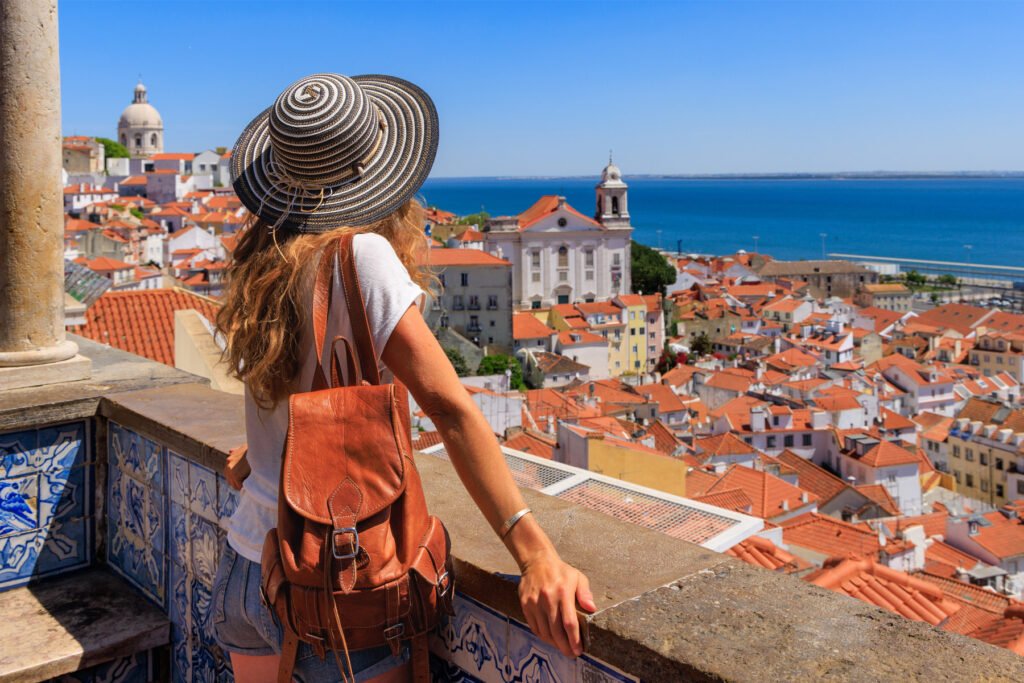
Discover Portugal with: what to do Portugal 2026 guide
If you are planning a trip to Portugal, figuring out What to Do Portugal 2026 Guide, is the ultimate starting point for an unforgettable journey. From the vibrant coastal charm of Lisbon and Porto to the dramatic landscapes of Madeira Island, Portugal offers a rich blend of historic architecture, world-class beaches, and warm local hospitality.
Whether your goal is to explore the top places to visit in Portugal, indulge in authentic portuguese gastronomy, or discover lucrative opportunities to invest & buy houses in Portugal, this ultimate guide covers everything you need to plan your ideal itinerary. The biggest mistake travelers make is trying to “see everything” in a single week. Portugal rewards smart routing: pairing a major culture-filled city with a scenic coastal or island region, allowing room for genuine local experiences.
- When to go: * March–May: Mild weather, fewer crowds, perfect for city breaks.
- June–August: Peak season; best for beaches, but book 4-6 months in advance.
- September–October: The “Golden Window.” Perfect weather and atmosphere.
- How long you need: 7 days is the minimum for a classic route, while 14 days allows you to include the islands (Madeira or Azores) without rushing.
Quick Picks: The Best of Portugal (in 2 minutes)
Short on time? Start here:
- Spend 2–4 days in Lisbon and include Sintra as a mandatory day trip.
- Do Porto + Douro Valley for world-class wine and river views.
- Choose Algarve for golden cliffs and turquoise waters (focus on Lagos or Tavira).
- Pick Madeira for dramatic landscapes, luxury nature energy, and year-round spring.
- Pick Azores if you want volcanic scenery, hot springs, and raw, untouched nature.
What to Do Portugal 2026 (Portugal attractions)
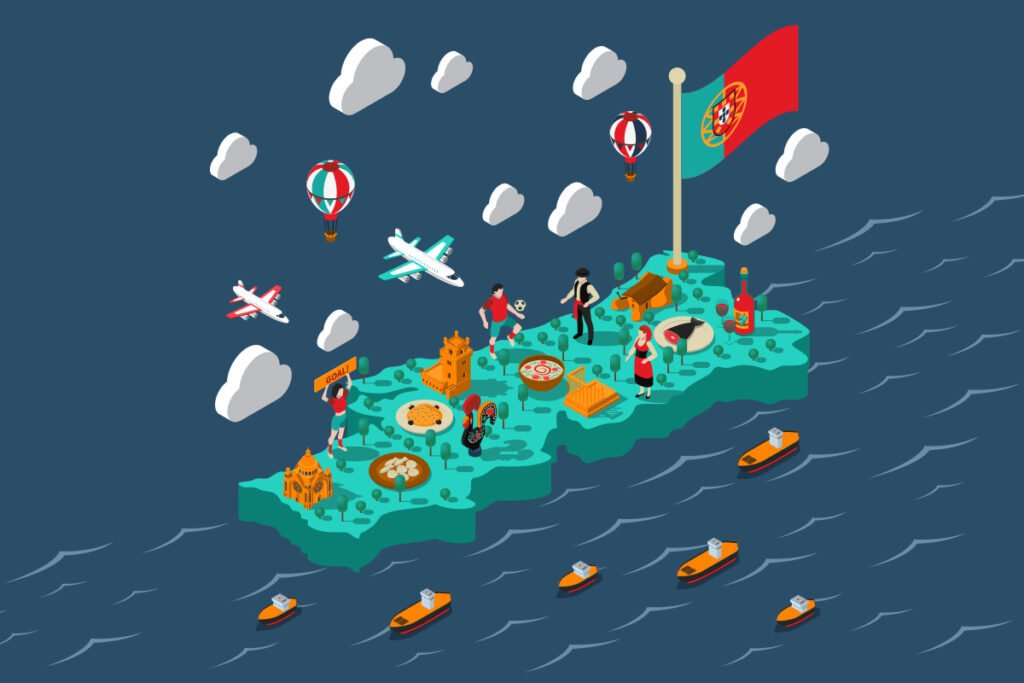
Best places to visit in portugal (By destinations)
Lisbon – The Main City
Lisbon is the heart of Portugal and the most versatile starting point for any traveler. Known as the “City of Seven Hills,” it seamlessly blends ancient history with a booming tech and investment scene. Whether you are looking for the best sunset spots, world-class gastronomy, or luxury shopping, Lisbon delivers an unparalleled urban energy.
But beyond its titles, Lisbon is a city that embraces you. There is an undeniable charm in its atmosphere—it is warm, welcoming, and profoundly comfortable. Walking through its streets doesn’t feel like navigating a cold metropolis, but rather like discovering a collection of intimate villages. The presence of the Tagus River (Rio Tejo) gives the city a unique sense of freedom; its golden light and the open horizon provide a breath of fresh air that follows you from the hills down to the shore.
Every street here tells a story through its “pormenores” (small, exquisite details). As you wander, you’ll feel the “Portuguese aroma” in the air—the scent of traditional food from the many restaurants that line its historic alleys, mixing with the salty breeze of the river. From the hand-painted Azulejos (ceramic tiles) decorating the facades to the intricate Calçada Portuguesa (cobblestone mosaics) under your feet, Lisbon is a sensory experience where every corner invites you to stay.
Lisbon is a sensory experience where every corner invites you to stay. If you’re ready to explore every detail of the city, check out our What to Do Lisbon District 2026 Guide.
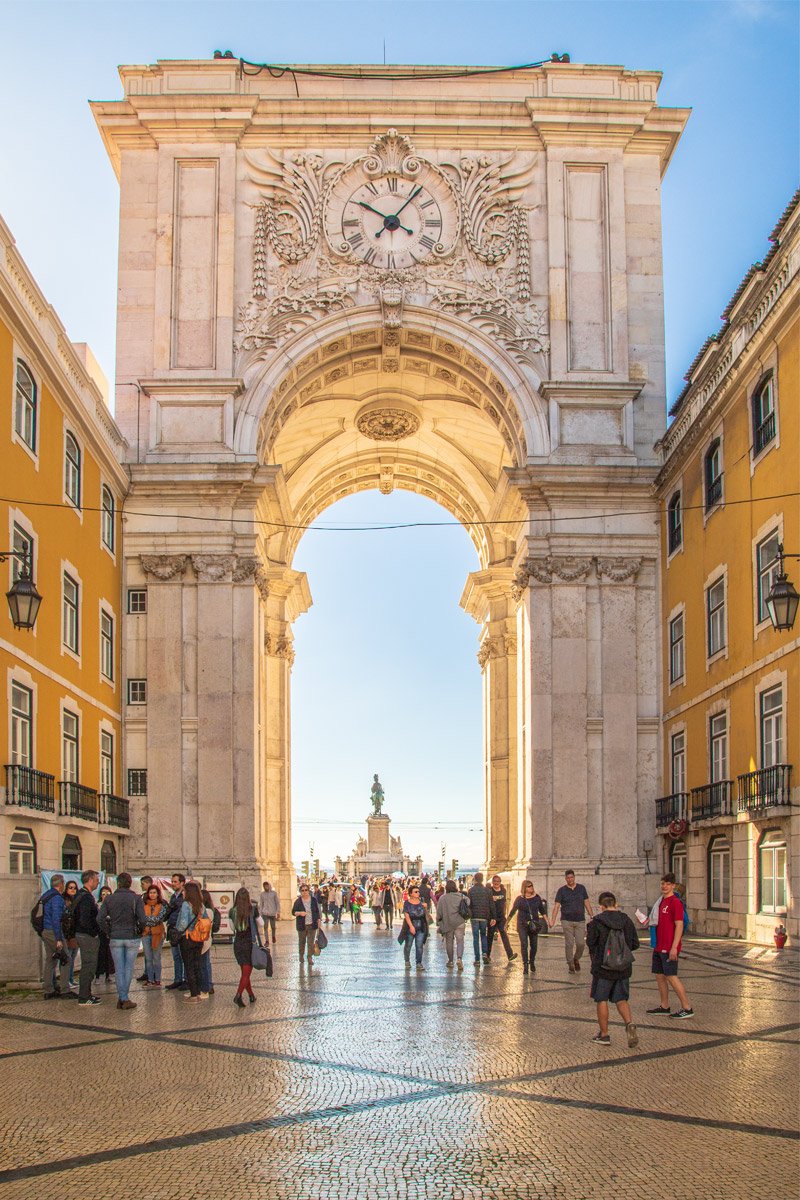
The Gateway to Lisbon: Rua Augusta Arch
Standing tall at the edge of the magnificent Praça do Comércio, the Rua Augusta Arch is much more than just a beautiful entrance to the city; it is a symbol of Lisbon’s resilience.
- The Miradouros: Experience Lisbon from above at the iconic Elevador de Santa Justa, a unique vantage point in the heart of the city.
- Baixa & Chiado: Stroll through historic streets to the riverfront at Praça do Comércio and ride the traditional yellow trams.
- Cascais: A short trip to this coastal gem offers beautiful Atlantic beaches and a sophisticated, high-end lifestyle.
- Belém District: Explore the Jerónimos Monastery and don’t miss a freshly baked Pastel de Belém dusted with cinnamon.
- Alfama’s Soul: Get lost in the city’s oldest alleys, where the authentic spirit of Lisbon and Fado music come alive.
- Sintra Day Trip: A mystical UNESCO site featuring the colorful Pena Palace and the secret gardens of Quinta da Regaleira.
WTDP Tip: Skip the crowded Tram 28; use Tram 24 for a more local and comfortable way to see the historic hills.
Porto
While Lisbon is vibrant and cosmopolitan, Porto offers a completely different rhythm — one that is deeply authentic and effortlessly cool. Often described as the soul of the country, Porto is more laid-back, featuring a “bohemian-chic” energy that makes it feel intimate and surprisingly comfortable. It is a city of granite and gold, where the grandeur of its ancient architecture meets a soulful, slightly “hippie” and relaxed vibe that invites you to exhale. Here, luxury isn’t about being flashy; it’s about the “slow-living” pleasure of a sunset by the water.
The undisputed protagonist of the city is the Douro River. The riverside life is an immersive experience: the riverfront is lined with an immense variety of traditional restaurants and modern terraces where the aroma of grilled octopus and local wine fills the air. Walking across the iconic Ponte Dom Luís I is a breathtaking journey in itself — a mandatory passage that connects the stacked, colorful houses of the Ribeira with the historic wine cellars of Vila Nova de Gaia. From the top of the bridge, the horizon opens up, offering a view that explains why Porto is considered one of the most beautiful cities in the world.
Porto is a city designed for wandering without a map. Its narrow, winding streets are remarkably easy to navigate on foot, leading you past hidden art galleries, independent boutiques, and small plazas where the “Old World” charm is still very much alive. Unlike the fast-paced energy of other European hubs, Porto feels like a long conversation over a glass of Port wine — easy, warm, and unhurried. Whether you are exploring the artistic district of Cedofeita or watching the Atlantic waves crash against the lighthouse in Foz do Douro, the city maintains a grounded, relaxed atmosphere that makes every visitor feel like a local.
The city maintains a grounded, relaxed atmosphere that makes every visitor feel like a local. To dive deeper into the bohemian-chic soul of the north, explore our What to Do Porto District 2026 Guide.
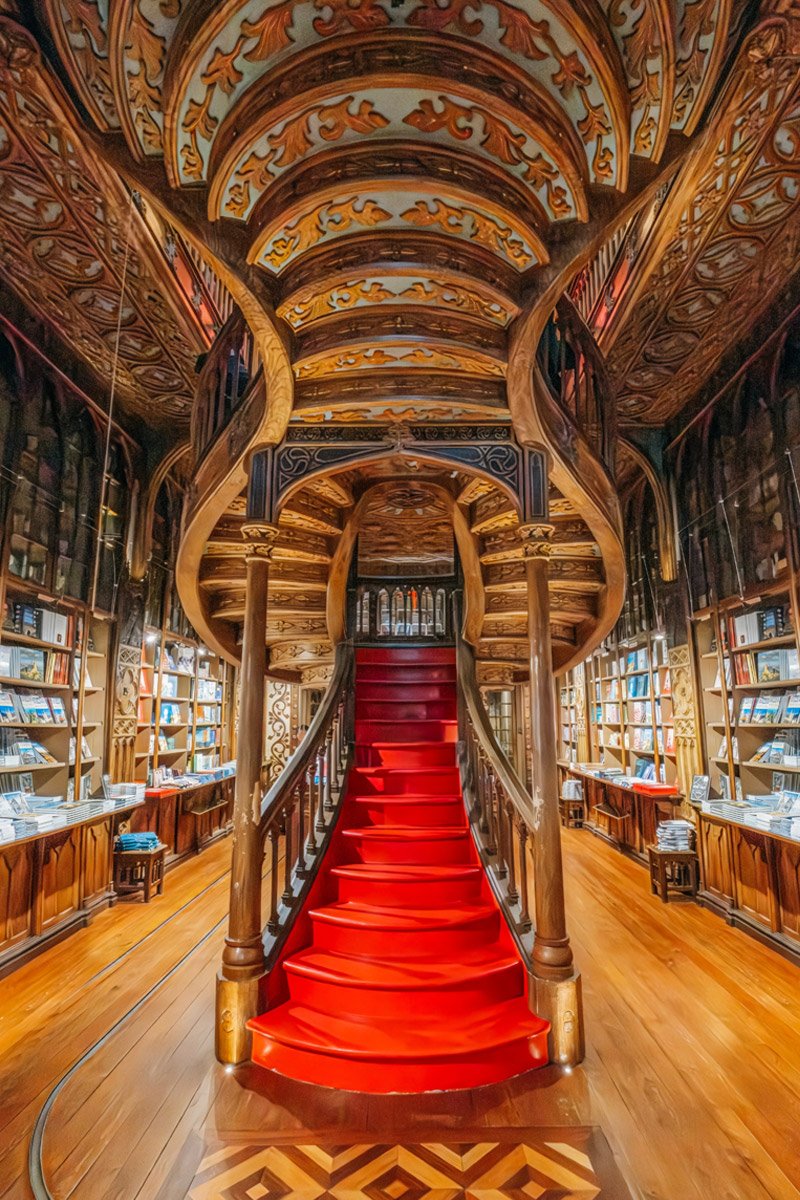
Livraria Lello: The World’s Most Beautiful Bookstore
Opened in 1906, this Neo-Gothic jewel in Oporto is world-famous for its stunning crimson staircase and stained-glass ceiling. Beyond its architectural beauty, it is legendary for its long-standing connection to literary inspiration (often linked to the world of Harry Potter).
- Livraria Lello & Clérigos: Beyond the river, explore the neo-Gothic beauty of one of the world’s most famous bookstores and climb the Clérigos Tower for a 360-degree view of the city’s terracotta roofs.
- Douro River Boat Trips: To truly appreciate Porto’s scale, take a boat tour to admire the six bridges and the stunning city skyline from the water.
- The Iconic Francesinha: You cannot leave without trying Porto’s most famous dish. This hearty, layered sandwich with its secret spicy beer sauce is the ultimate comfort food and a true symbol of the city’s culinary identity.
- Serralves Museum: A minimalist architectural masterpiece surrounded by stunning Art Deco gardens, representing the modern, creative side of the city.
WTDP Tip: Skip the massive queues at the Luis I Bridge’s lower level; instead, take the Teleférico de Gaia for a breathtaking aerial view, or cross the upper deck of the bridge at sunset to watch the city turn golden with half the crowd. If you want an authentic river experience without the big tour boats, look for the traditional Rabelo boats at smaller docks for a more private, unhurried journey.
Algarve
The Algarve is Portugal’s most famous coastline, but in 2026, it is reinventing itself far beyond the typical summer resort image. It is a region of dramatic contrasts where the rugged Atlantic power meets the Mediterranean soul. Imagine golden limestone cliffs that glow under a sun that shines 300 days a year, hiding secret beaches and sea caves carved by the tides. The air here smells of salt and wild thyme, and the lifestyle is a seamless blend of traditional fishing heritage and a new, sophisticated luxury scene that attracts the world’s most discerning travelers.
While the west is dominated by the wild energy of the ocean and surf-centric towns, the central and eastern Algarve offer a more curated and tranquil experience. It is a place for those who appreciate the finer things: long lunches at beach clubs overlooking turquoise waters, rounds of golf on some of Europe’s most prestigious courses, and the quiet luxury of whitewashed villages that have kept their pace slow for centuries. Whether you are looking for a high-end investment in the “Golden Triangle” or a raw connection with nature along the coastal trails, the Algarve remains the ultimate European retreat.
Whether for investment or nature, the Algarve remains the ultimate European retreat. Discover the best of the south and its secret spots in our What to Do Algarve 2026 Guide.
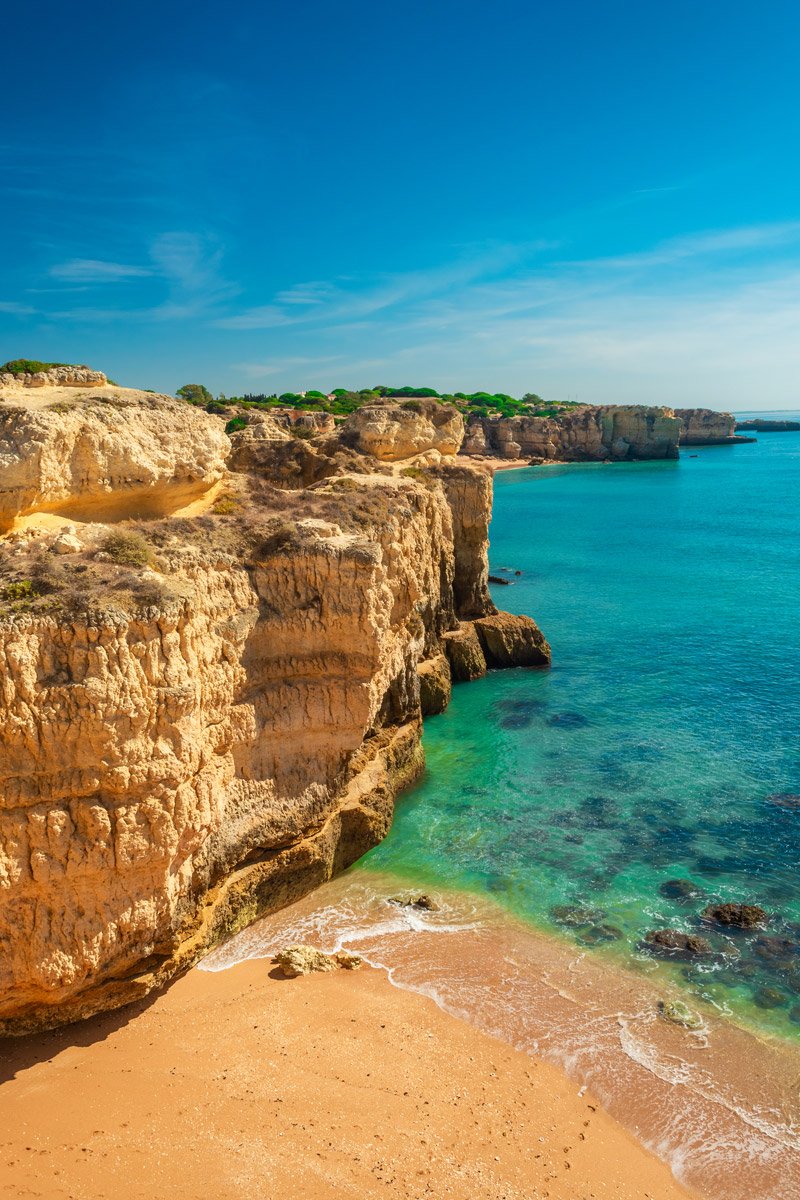
Golden Cliffs and Clear Atlantic Water on Portugal’s Algarve Coast.
The breathtaking scenery of the Algarve is a masterpiece of marine erosion and sedimentary history. These “Golden Cliffs” are primarily composed of Calcarenite—a type of limestone formed millions of years ago from compressed shells and coral.
- Ponta da Piedade & Lagos: This is the most iconic landscape of the region. Explore the labyrinth of golden rock formations, sea arches, and hidden grottoes via a private boat or kayak. The town of Lagos itself offers a vibrant mix of historic walls and a trendy, modern social scene.
- Tavira & The Authentic East: For a more traditional and serene atmosphere, head to Tavira, often called the “Venice of the Algarve.” With its Roman bridge, salt pans, and the pristine anchor cemetery on the beach, it offers a window into the Algarve’s elegant past and a quieter, more sophisticated pace of life.
- The Benagil Wonder: No trip to the south is complete without seeing the Benagil Cave from the water. This massive sea cave, with its natural skylight and interior beach, is a testament to the geological beauty that makes the Algarve’s coast unique in the world.
WTDP Tip: To avoid the crowds and experience the Algarve’s true “insider” soul, visit the Seven Hanging Valleys Trail at sunrise. If you’re looking for a private experience, charter a catamaran from the Vilamoura marina to reach the “deserted islands” of the Ria Formosa, where you can enjoy the turquoise waters in absolute peace.
Madeira
Madeira is a volcanic sanctuary that redefines the meaning of “impactful landscapes.” It is a land of vertiginous mountains and dramatic cliffs that plunge directly into the deep blue of the Atlantic, creating a sense of scale that makes you feel as though you’ve reached the edge of the world. The visual contrast is unparalleled: the island’s lush, almost electric-green vegetation feels even more intense against the vastness of the ocean. Here, the constant dance between clouds hugging the peaks, the sharp ridges, and the sea creates a living masterpiece that changes by the minute. It is the ultimate destination for those seeking the power of raw nature without sacrificing sophistication.
While the island maintains the charm of its traditional villages and a cozy, small-scale capital, Madeira is currently experiencing a significant boom in luxury real estate. It has become the preferred refuge for high-net-worth investors and premium digital nomads seeking avant-garde villas with infinity views over the horizon. The lifestyle here is a perfect blend of adventure and absolute calm: in the morning, you can hike trails that look like a fantasy movie set, and by the afternoon, you can be sipping a glass of Madeira wine on a terrace perched high above the cliffs. It is an island built for walking, breathing the purest air in Europe, and losing yourself in the immensity of its vertical landscapes.
It is an island built for losing yourself in the immensity of its vertical landscapes. If you’re ready to hike above the clouds, don’t miss our What to Do Madeira Island 2026 Guide.
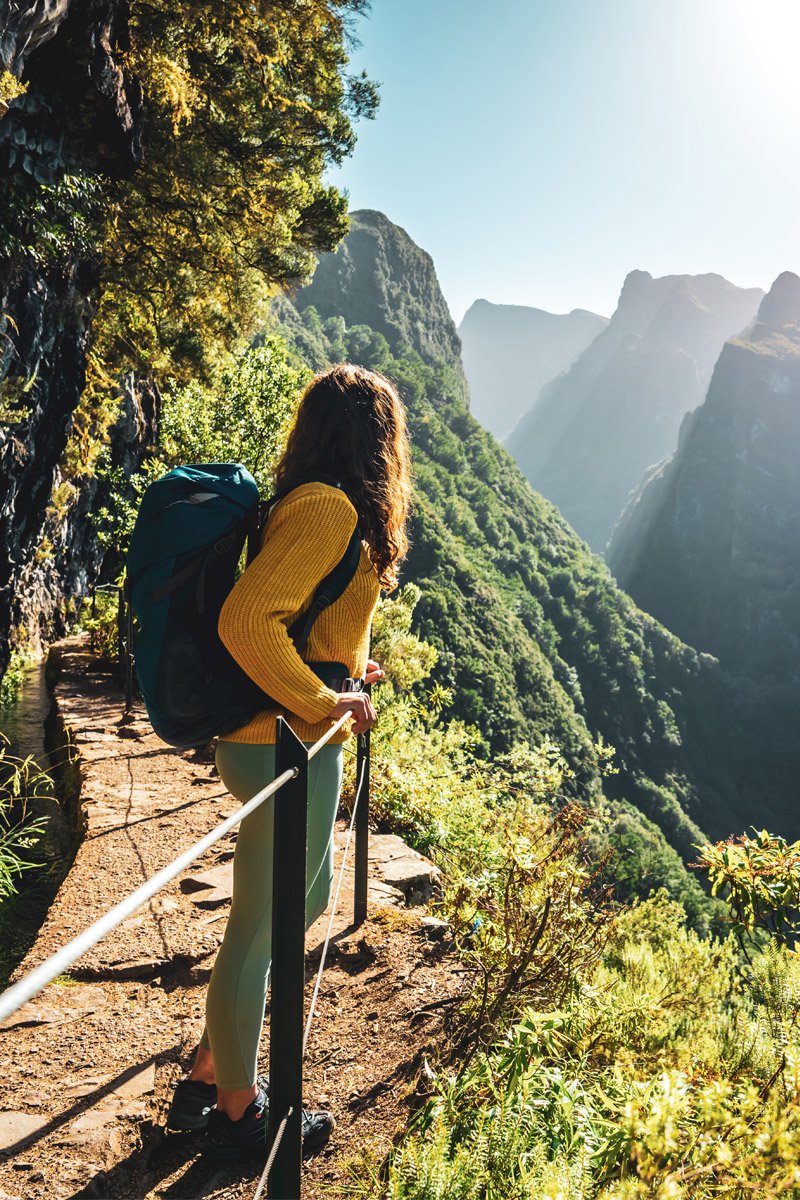
Vertical Origins: the Volcanic Soul of Madeira
Born from a volcanic “hotspot” 5 million years ago, Madeira is the summit of a massive shield volcano rising 6,000m from the ocean floor. Its rugged peaks are ancient basaltic lava shaped by millennia of Atlantic erosion. The island is largely made of Basalt, a dense volcanic rock. In places like the São Vicente caves, you can see natural tunnels formed by flowing magma that cooled on the outside while remaining liquid on the inside.
- The Levadas & Ancient Forests: Madeira’s heart lies in its Levadas—historic irrigation channels that double as world-class hiking trails. Routes like Caldeirão Verde or 25 Fontes take you through lush UNESCO-protected forests to hidden waterfalls, offering a level of tranquility that is rare in Europe.
- The Magic of Fanal: For a truly mystical experience, visit the Fanal Forest. This ancient laurel forest, often draped in a thick, mysterious fog, is home to centuries-old trees with twisted, cinematic shapes. It’s a place where you share the landscape with free-roaming local cattle, creating a surreal and peaceful atmosphere that feels like another world.
- Sky-High Views & Volcanic Cliffs: Drive to Pico do Arieiro at sunrise to stand above a sea of clouds. For a stark contrast, explore Ponta de São Lourenço, the island’s eastern tip, where arid landscapes and dramatic cliffs plunge into the deep blue Atlantic, offering some of the most powerful coastal views in Portugal.
WTDP Tip: Don’t let the clouds in Funchal ruin your day. Madeira has dozens of microclimates; it can be raining in the north and sunny in the south. Before heading out to a levada or a viewpoint, always check the ‘Netmadeira’ live webcams. If the mountains are covered in fog, head to Ponta do Sol—it’s statistically the sunniest spot on the island.
Azores
While Madeira is a refined, lush garden with a warm Mediterranean soul, The Azores represent the raw, wild, and misty heart of the Atlantic. Composed of nine distinct volcanic islands, this archipelago feels significantly more “green” and solitary. It is a place where nature remains the protagonist, and human presence feels like a quiet observer. As you explore, you will be struck by the sight of vast, rolling pastures where large herds of dairy cows graze freely against a backdrop of deep blue ocean. This is the only place in Europe where you can walk through massive tea plantations (Gorreana and Porto Formoso), creating a unique landscape of manicured green bushes that contrast with the rugged volcanic soil.
The Azores are defined by their powerful relationship with the earth’s inner heat. Unlike Madeira, here you can immerse yourself in natural hot springs located in the middle of ancient forests or even swim in the ocean at Ferraria, where geothermal vents heat the Atlantic waters within a rocky cove. To explore this paradise, you will typically fly into Ponta Delgada on São Miguel island, the main hub, and from there use small planes or seasonal ferries to hop between islands. If you are looking for a destination that is quieter, more mysterious, and deeply connected to the primal forces of nature, The Azores is your ultimate sanctuary.
If you are looking for a sanctuary deeply connected to the primal forces of nature, The Azores is your destination. Find your wild side in our What to Do Azores Islands 2026 Guide.
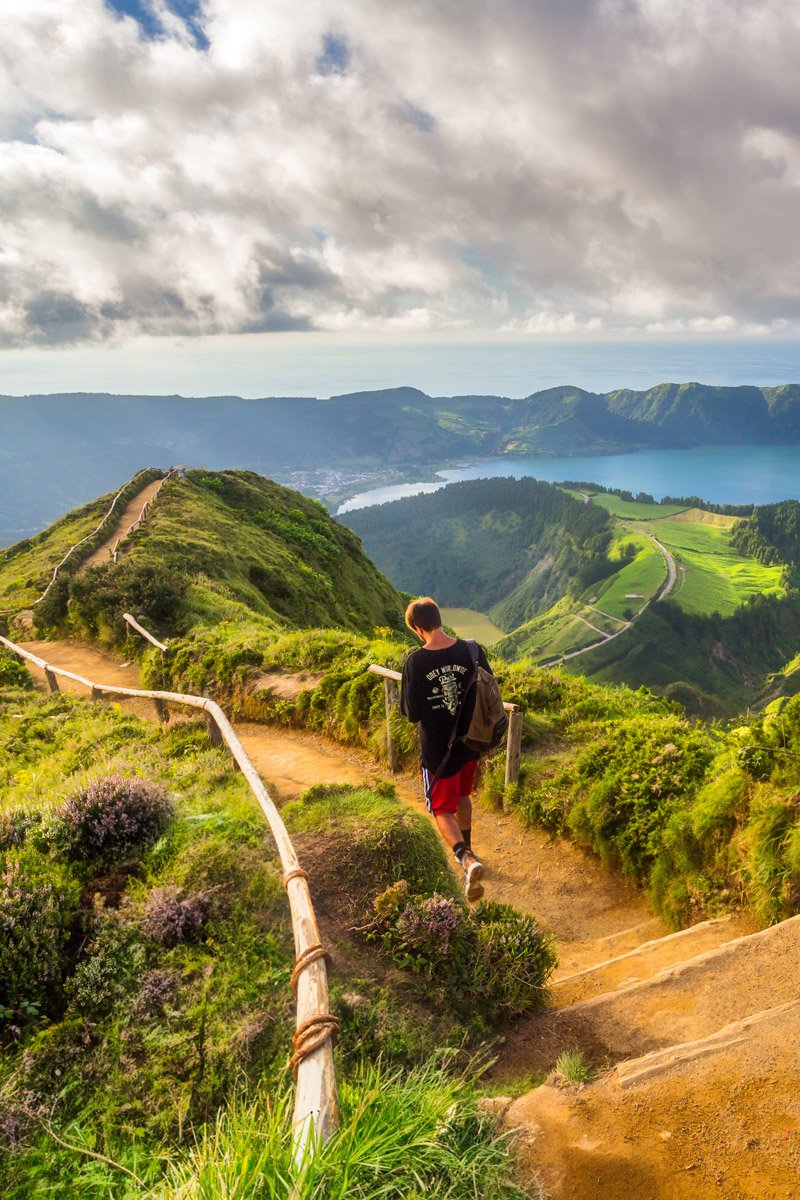
Sete Cidades is the Azores Icon: A idge Hike with Sweeping Lake Views.
Sete Cidades is a massive stratovolcano with a 5km-wide caldera. This geological depression was formed by the explosive collapse of the volcano’s summit during prehistoric eruptions. Its walls now reach 500m in height, creating a unique microclimate for its endemic flora.
- Furnas (São Miguel): Immerse yourself in iron-rich thermal waters and relax in Terra Nostra Park, surrounded by botanical gardens and the volcanic energy boiling beneath your feet.
- Sete Cidades (São Miguel): Gaze at the legendary blue and green lakes from the Vista do Rei viewpoint; an iconic landscape set within a massive volcanic caldera.
- Vila Franca Islet (São Miguel): A submerged volcanic crater that forms a perfect circular pool. There are daily boats from the marina to this crystal-clear water paradise.
- Poço da Ribeira do Ferreiro (Flores): The most dramatic scenery in the archipelago—an imposing green wall where dozens of waterfalls cascade into a silent lagoon.
- Lagoa do Fogo (São Miguel): Feel absolute peace in this untouched lagoon, perched high in the mountains, with white sand beaches and breathtaking views of the Atlantic horizon.
WTDP Tip: For the ultimate Azores experience, timing is everything. If you want to swim in the hot springs of Ferraria, you must go at low tide (check a tide app); otherwise, the ocean covers the warmth. Also, the lakes like Sete Cidades are often hidden by clouds; use the ‘SpotAzores’ app to see real-time visibility. If the peaks are foggy, it’s the perfect time to visit the tea plantations or the Furnas hot springs!
A simple Itinerary: What to do Portugal in 7–14 days
7-Day (The Atlantic Classic): Lisboa + *Aveiro + Porto:
Discover Lisboa (2 days) exploring the historic core and the monuments of Belém. Then, head north to Aveiro (2 days) to trade the city hills for the “Portuguese Venice.” Here, you can ride a Moliceiro through the urban canals, explore the wildest natural water paths of the Ria de Aveiro, and photograph the iconic striped houses of Costa Nova. Finish your week with Porto (2 days) soaking in the soul of the Douro.
9-Day (The Deep Dive): Lisboa + Porto + Algarve
A complete mainland experience. Start with the Lisboa District (4 days), continue with Porto (2 days), and fly or drive south to enjoy the Algarve (3 days) to discover the golden cliffs and turquoise caves of the Atlantic south.
14-Day (The Ultimate Experience): The Mainland + The Islands
The definitive Portugal journey. Combine the complete route of Lisboa, Aveiro, Porto, and Algarve (10 days) with a trip to Madeira or the Azores (4 days). From the historic tiled streets of the continent to the lush volcanic peaks and emerald lagoons of the Atlantic islands.
FAQ: Planning Your 2026 Trip
- Is 7 days enough? It’s enough for Lisbon and Porto, but you’ll miss the islands and the south.
- Do I need a car? In Lisbon and Porto, no. In Madeira, Algarve, and the Azores, absolutely yes.
- Is Portugal expensive? It remains more affordable than France or Italy, but 2026 prices reflect its growing popularity in the luxury sector.
Plan your Trip with WTDP
If you want a trip that feels smooth and curated, WTDP is your local partner. We help you skip the tourist traps and find the soul of Portugal. Next step: Explore our specific destination guides or contact us if you are planning a longer stay or investment research.
Excelente guia, muito completo! aborda os pontos mais importantes e emblemáticos de Portugal. Parabéns
The best tourist guide ever! Portugal is a wonderful country. Highly recommended!