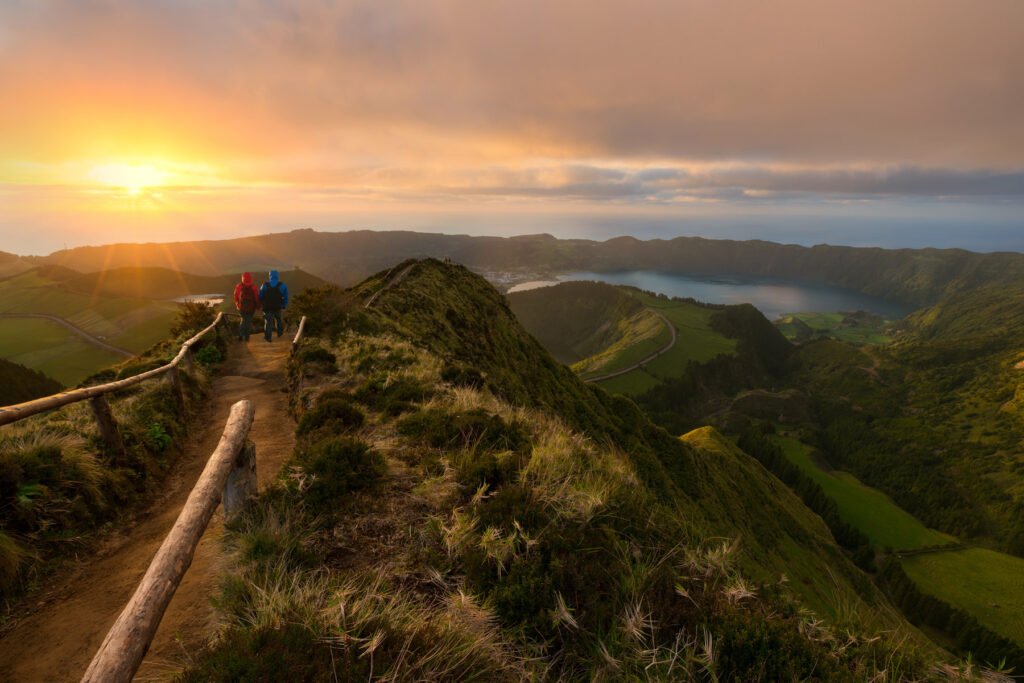
Discover Azores With: What To Do Azores Islands 2026 Guide
If you are planning a trip to the Azores, figuring out What to Do Azores Islands 2026 Guide is the ultimate starting point for an unforgettable journey. The Azores are not merely a destination; it is a volcanic sanctuary where the Earth remains in a state of constant creation. If Madeira is the “vertical paradise,” this archipelago of nine islands is the “Jurassic sanctuary” of the Atlantic—a land defined by steaming fumaroles, neon-blue crater lakes, thermal hot springs, and prehistoric lagoons.
Whether your goal is to explore the best places to visit in Azores, indulge in authentic azores gastronomy (like the famous Cozido das Furnas cooked underground), or discover lucrative opportunities to invest & buy houses in Azores, this ultimate guide covers everything you need to plan your ideal itinerary. Which archipelago should you choose? While both offer volcanic drama, they have different souls. To see the contrast for yourself, check out our What to Do in Madeira Island 2026 Guide and discover why many travelers decide to visit both.
Best Time to Visit Azores
- May–June: Pleasant weather, blooming hydrangeas starting to cover the roadsides, and great conditions for whale watching without peak summer crowds.
- July–August: Warmest months, ideal for swimming in thermal pools, ocean dips, and full hydrangea bloom across the islands (book flights and cars early).
- September–October: Ideal balance; warm ocean temperatures, comfortable hiking weather, and fewer tourists.
The Logistics: Mastering the Nine Islands
Navigating this archipelago, which stretches across 600 km of the Atlantic, requires a strategic approach. The islands are divided into three distinct groups:
- Eastern Group: São Miguel (the main hub) and Santa Maria.
- Central Group: Terceira, Pico, Faial, São Jorge, and Graciosa.
- Western Group: Flores and Corvo.
- Arrival & Transit: Most international flights land at Ponta Delgada (São Miguel). Inter-island travel is managed via SATA (Azores Airlines) flights. For the “Triangle” (Pico, Faial, and São Jorge), the AtlânticoLine ferry provides a fast and efficient connection.
- Car Rental: A rental vehicle is essential. Public transport is minimal and does not reach the remote calderas or thermal springs.
- Weather Management: The SpotAzores app is the most reliable tool for checking live webcams, as the archipelago’s microclimates can change within minutes.

Island Hopping: Ferry or Plane?
To move between the islands, you can choose between ferry or plane, and the “cheapest” option really depends on your itinerary. Atlanticoline ferries are budget-friendly and perfect for short distances (like the “Triangle” between Faial, Pico, and São Jorge). However, for longer distances—like traveling from São Miguel to Flores—Azores Airlines flights are the only practical choice. While seasonal ferries do connect the groups in summer, the journey can take over 12 hours, making flying the best way to save time for exploring. Check the ferry schedules at atlanticoline.pt and flights at azoresairlines.pt
Quick picks: What to do Azores Islands 2026
- Thermal Immersion: Soak in iron-rich, orange thermal pools at Terra Nostra or Poça da Dona Beija.
- Whale Watching: The Azores are a global sanctuary; resident sperm whales and dolphins can be observed in their natural habitat.
- Active Adventure: Canyoning in São Jorge or kayaking through the silent craters of Sete Cidades.
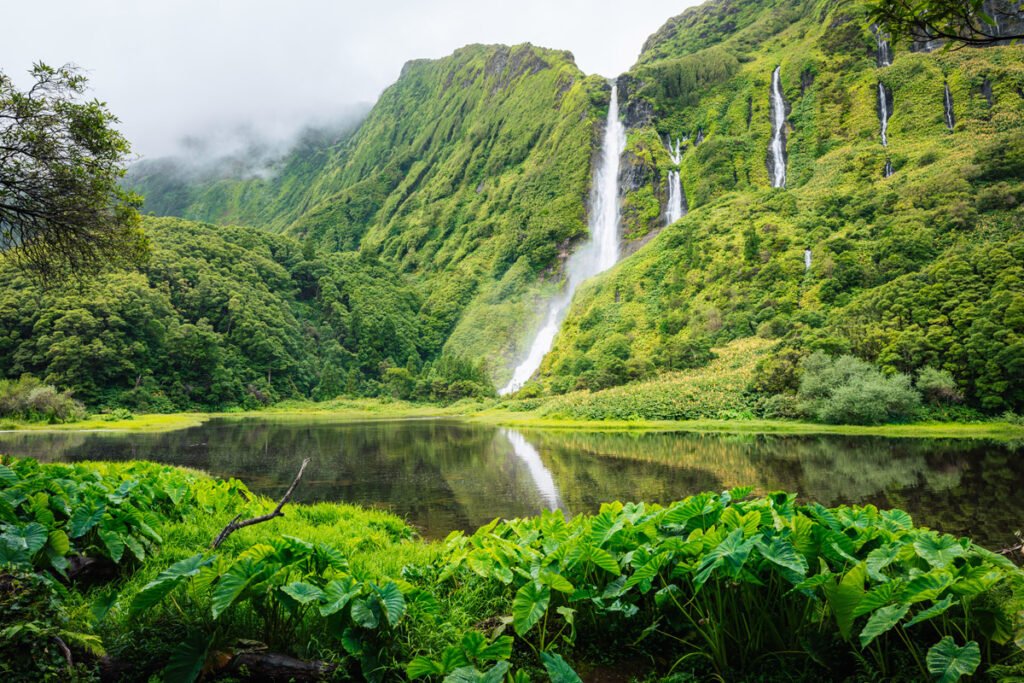
- The Jurassic Walk: Visit Poça Ribeira do Ferreiro in Flores—a vertical wall of 20 waterfalls dropping into a single prehistoric lagoon.
what to do Azores 2026 (by island)
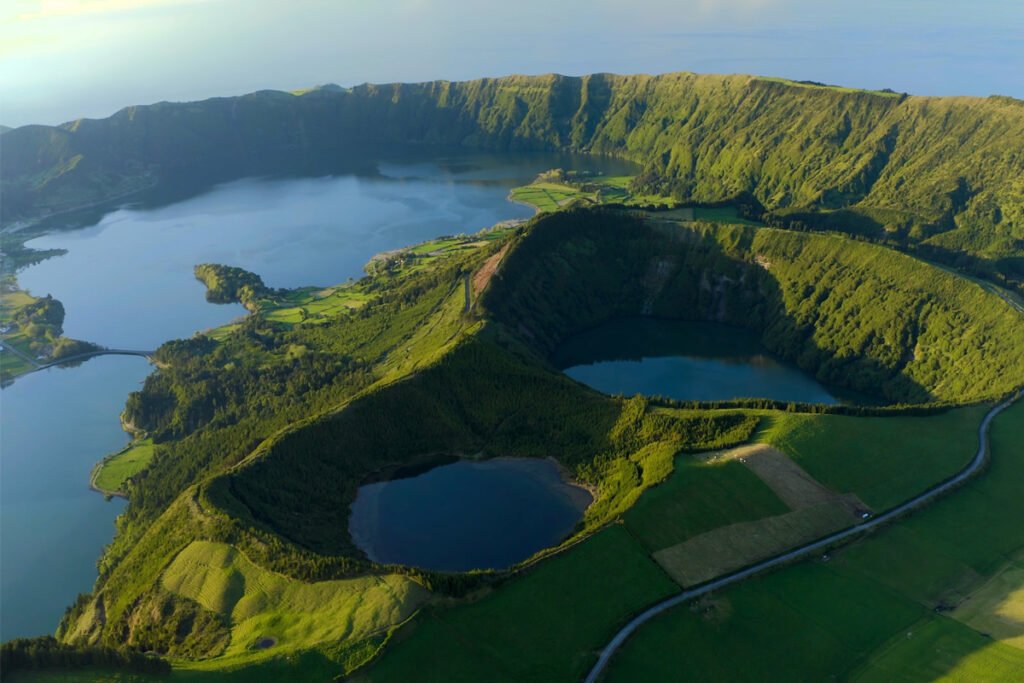
The Azores is a place where the Earth still feels alive and raw. The best way to experience this ‘Jurassic sanctuary’ is to focus on its most legendary landscapes. Across the nine islands of the archipelago, we highlight the absolute must-visit spots and the unique wonders each one has to offer.
1. São Miguel: The “Green Heart” (Main Island)
To explore the largest island effectively, the territory is divided into three volcanic coordinates:
Route 1: The mystical west (Sete Cidades)
- Boca do Inferno & Lagoa do Canário: The most iconic ridge walk in the Atlantic, offering a direct view over three different lakes.
- Sete Cidades: The legendary twin lakes (one blue, one green) located inside a massive volcanic caldera.
- Pico do Carvão: A panoramic stop overlooking the central, narrowest part of the island.
- Gruta do Carvão: An impressive lava tube located beneath the city of Ponta Delgada.
Route 2: The volcanic soul (Furnas & Vila Franca)
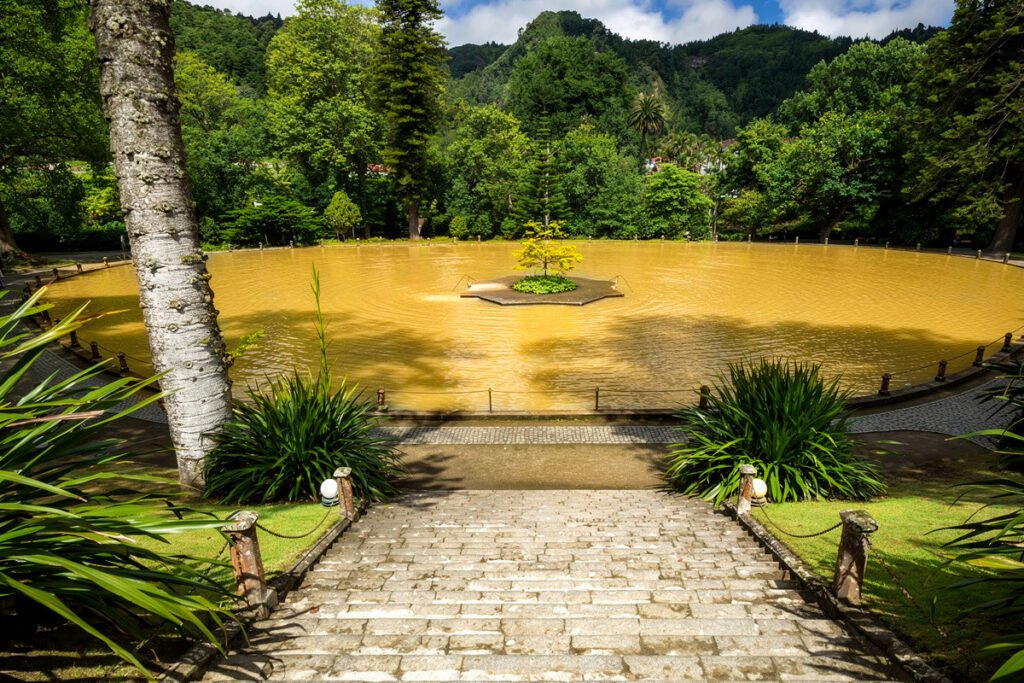
- Parque Terra Nostra: A world-class botanical garden featuring a legendary geothermal pool.
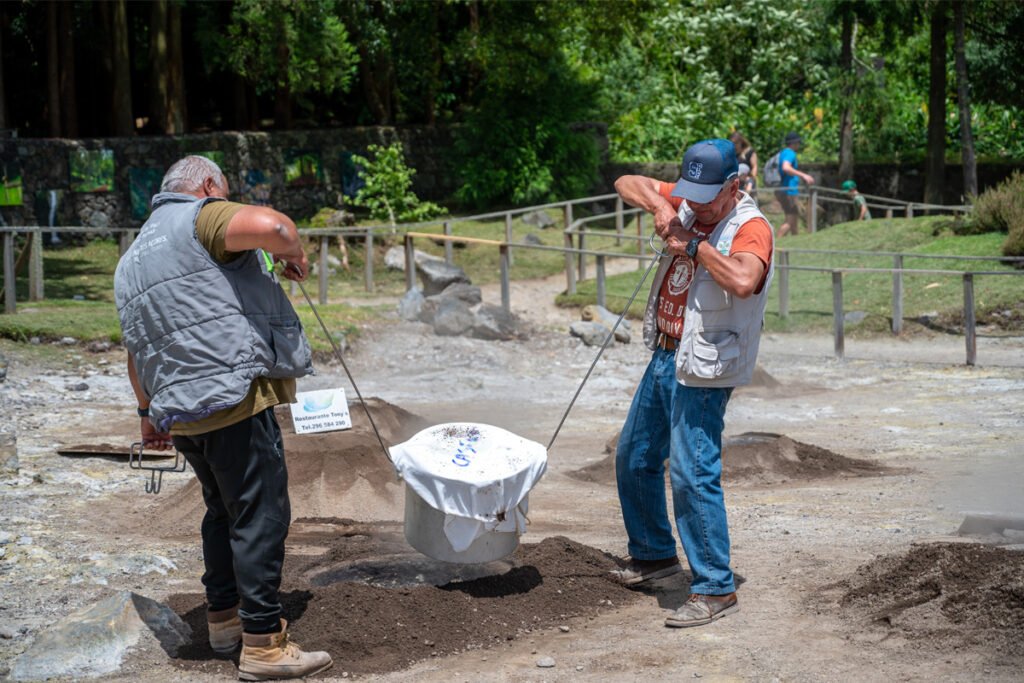
- Lagoa das Furnas & Parque da Grená: The lake perimeter offers views of the Fumarolas, where the traditional Cozido stew is cooked underground.
- Mata Jardim José do Canto: A serene forest garden containing the Capela Nossa Senhora das Vitórias, a stunning neo-gothic chapel.
- Miradouro Pico do Ferro: A primary balcony view overlooking the entire Furnas valley.
- Praia do Fogo: A unique beach in Ribeira Quente where the sand is naturally warmed by volcanic activity.
- Nossa Senhora da Paz: A landmark white chapel with a monumental staircase overlooking the Vila Franca coastline.
Route 3: The wild center (Lagoa do Fogo)
- Lagoa do Fogo: The most pristine and untouched crater lake on the island.
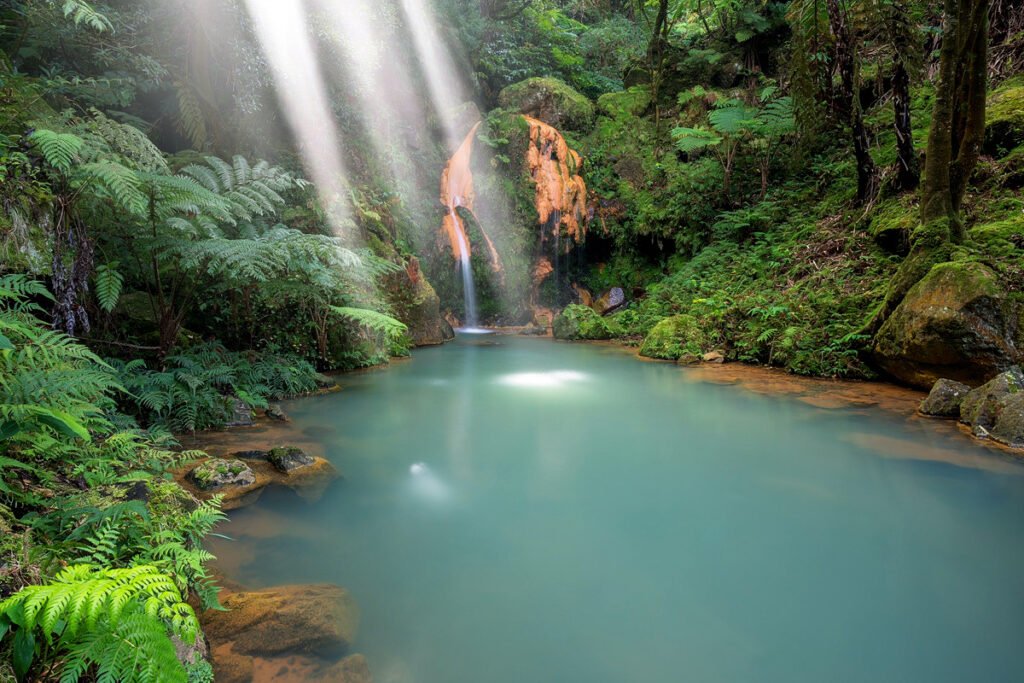
- Caldeira Velha: A thermal park set in a lush, jungle-like environment, featuring a warm waterfall.
- Salto do Cabrito: A hidden waterfall accessible via a metallic walkway over a dramatic canyon.
- Lagoa do Congro: A “secret” deep-green lake tucked away in a dense, silent forest.
2. The Other Islands: Hidden Wonders
Flores: The waterfall kingdom (Western group)
- Poça Ribeira do Ferreiro (Alagoinha): Often cited as the most beautiful spot in the Atlantic. It features a lush green cliff with dozens of waterfalls pouring into a single, calm lagoon.
- Cascata Poço do Bacalhau: A 90-meter waterfall dropping into a natural swimming pool at the edge of the village.
Terceira: Underground mysteries (Central group)
- Algar do Carvão: A rare geological site where visitors can walk inside an empty volcanic chimney.
- Gruta do Natal: A massive lava tube with impressive rock formations.
- Serra do Cume: A viewpoint over the “Patchwork Plain”—miles of green pastures divided by traditional stone walls.

Pico & Graciosa: The Volcanic giants
- Mount Pico Hike: The ultimate Atlantic challenge—climb Portugal’s highest peak (2,351m) for an epic sunrise or a walk above the clouds.
- Lagoa do Capitão (Pico): A high-altitude lake that provides a perfect mirror reflection of Mount Pico (Portugal’s highest peak).
- Furna do Enxofre (Graciosa): An underground cavern with a giant dome and a lake, accessed via a spiral staircase inside a volcanic tower.
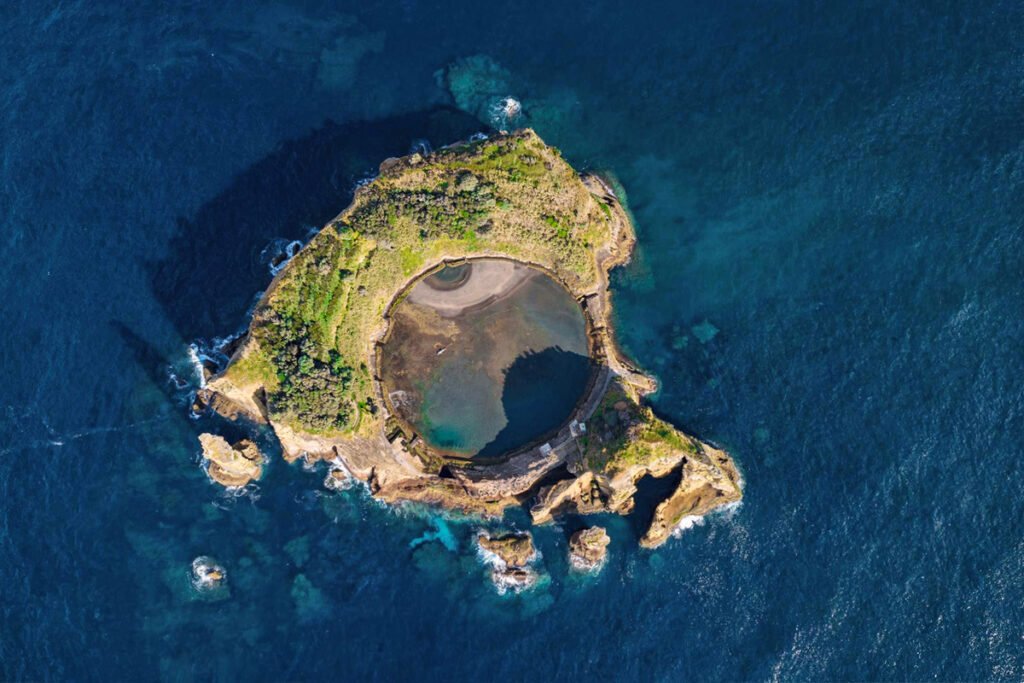
Special Feature: Ilhéu de Vila Franca do Campo
This submerged volcanic crater, located 1km off the coast of São Miguel, is one of the most recognizable landmarks of the archipelago.
Sustainability: Visitor numbers are strictly limited per day to protect the ecosystem. Online booking is highly recommended to secure a spot for snorkeling in the crystal-clear waters inside the crater.
Access: Transportation is provided by boat from the Vila Franca do Campo marina.
Seasonality: The boat service typically operates during the summer months (June to September).
The Azores essentials (Iconic places – Resume)
- Sete Cidades (Boca do Inferno viewpoint): The most iconic image of the Azores—a breathtaking ridge walk overlooking blue and green twin lakes inside a massive volcanic caldera.
- Lagoa do Fogo: The most pristine and untouched crater lake on São Miguel, surrounded by wild nature and dramatic mountain views.
- Parque Terra Nostra & Furnas: A world-class botanical garden where you can soak in a legendary orange, iron-rich geothermal pool and see the traditional ‘Cozido’ stew cooked underground by volcanic heat
- Caldeira Velha: A “Jurassic Park” experience—relax in warm thermal pools and a heated waterfall set in a lush, jungle-like fern forest.
- Ilhéu de Vila Franca do Campo: A perfectly circular submerged volcanic crater in the ocean; a paradise for snorkeling and one of the most unique swimming spots in the world.
- Poça Ribeira do Ferreiro (Flores): Often called the most beautiful spot in the Atlantic—a towering green wall with dozens of waterfalls dropping into a silent, prehistoric lagoon.
- Mount Pico (Lagoa do Capitão): Witness the majesty of Portugal’s highest peak reflected in a high-altitude lake—pure volcanic drama.
- Algar do Carvão (Terceira): One of the few places on Earth where you can actually walk inside an empty volcanic chimney draped in moss and ferns.
- Whale Watching: A global sanctuary; the best place to meet resident sperm whales and dolphins in the deep blue of the Atlantic.
- Furna do Enxofre (Graciosa): An architectural marvel of nature—a giant underground volcanic dome with a lake, reached via a spiral staircase inside a tower.
Azores Gastronomy & Cocktail Culture (The Azorean edition)
The Azores are an archipelago defined by the quality of its raw materials. It is not merely a place to eat; it is a “product destination.” Because of the volcanic soil and the Atlantic climate, the flavors here are intense, earthy, and incredibly fresh. From cows that graze on emerald-green pastures year-round to seafood caught in the deep blue of the mid-Atlantic, the Azorean table is a tribute to the purity of the land and sea.
What to Eat in Azores (The local way)
The local gastronomy is defined by bold flavors, fresh ingredients, and a touch of island tradition that has remained unchanged for generations. From the steaming calderas of Furnas where the earth itself acts as an oven, to the seaside terraces where the catch of the day arrives every morning, the Azorean food scene is authentic, unpretentious, and utterly delicious. Whether sharing a platter of local cheeses or enjoying a slow-cooked volcanic stew, every bite tells the story of this resilient and vibrant archipelago.
- Cozido das Furnas: The ultimate Azorean ritual. A meat and vegetable stew slow-cooked for six hours inside volcanic soil. The geothermal heat gives the meats a tender, earthy flavor that cannot be replicated by conventional means.
- The archipelago is a dairy powerhouse, responsible for approximately 50% of Portugal’s cheese production. The lush, year-round green pastures result in milk of exceptional quality. To truly understand the Azorean palate, one must experience the heritage of these traditional varieties:
- Queijo de São Jorge: A world-famous, sharp, and spicy aged cheese (usually 4, 7, or 12 months). It is the gold standard of Azorean dairy.
- Queijo da Ilha: A versatile, firm cheese with a salty kick.
- Fresh Cheese with Pimenta da Terra: Often served as a starter, this creamy white cheese is topped with a local spicy red pepper paste (pimenta da terra), creating a perfect balance of cool and heat.
- Bife à Regional: A premium local steak, thick and tender, topped with whole garlic cloves and a generous amount of pimenta da terra. It is typically served with a fried egg and homemade fries.
- Azorean Pineapple: A smaller, intensely sweet variety grown in traditional glass greenhouses. A local delicacy is serving it alongside Morcela (blood sausage), where the acidity of the fruit cuts through the richness of the meat.
- Lapas Grelhadas: Grilled limpets served sizzling in a pan with butter, garlic, and a splash of lemon. In the Azores, they are often prepared with a touch more of the regional spicy pepper compared to the Madeiran version.
- Cracas (Barnacles): For true seafood adventurers. These prehistoric-looking barnacles are boiled in seawater and served in their shells. They taste like the pure, concentrated essence of the Atlantic Ocean.
- Polvo à Regional: Octopus slow-cooked in red wine with garlic and spices until it reaches a melt-in-the-mouth consistency.
Real Estate & Lifestyle in Azores: Why buy a house in Azores?
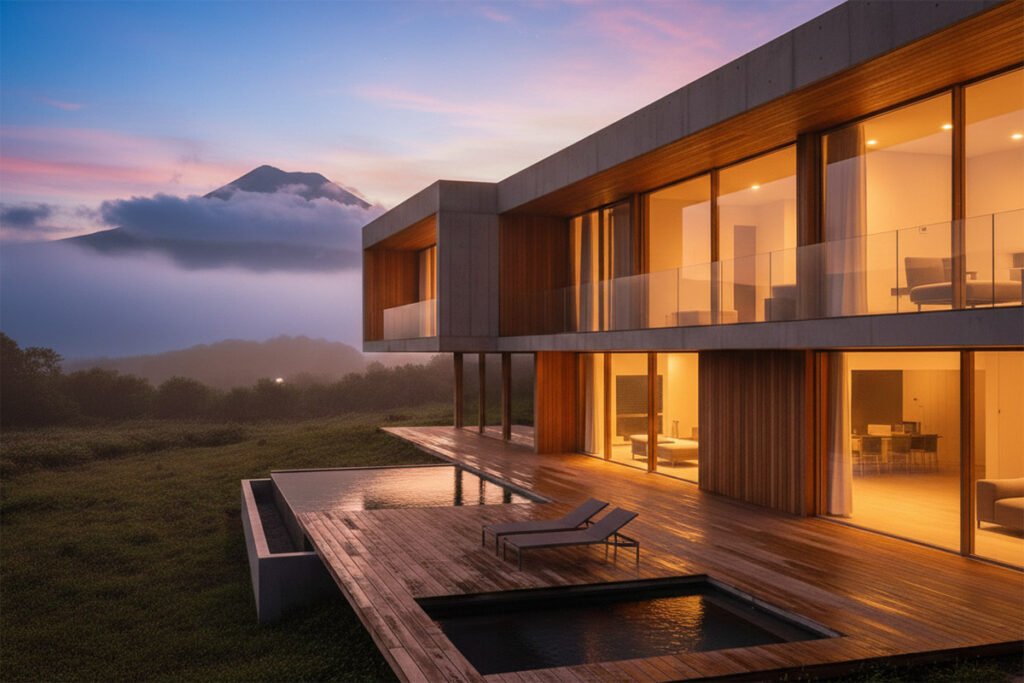
The Azores is no longer a hidden secret; it is a strategic choice for 2026. While Madeira attracts those seeking vertical drama and high-energy coastlines, the Azores draws a different profile: the investor or resident looking for tranquility, sustainability, and raw volcanic connection. Choosing to reside in the Azores is a commitment to a slower, more intentional rhythm of life. The archipelago offers a unique set of lifestyle attributes that are increasingly rare in mainland Europe:
A Certified Sanctuary: The Azores is the first archipelago in the world to be certified as a Sustainable Tourism Destination. For a resident, this means living in a place where nature is legally protected from over-development, ensuring that the “view from the window” remains unchanged for decades.
Unrivaled Safety & Calm: With one of the lowest crime rates in Europe and a population density that favors space over congestion, the islands are a premier “safe haven.”
Wellness & Micro-Climates: Daily life revolves around the outdoors. From morning swims in the heated ocean at Ferraria to evening walks in the thermal mists of Furnas, the environment naturally promotes physical and mental well-being.
Connectivity for Global Nomads: Ponta Delgada (São Miguel) and Horta (Faial) have developed into sophisticated hubs with high-speed fiber optics, making them ideal for remote workers who need to stay connected to London, Lisbon, or New York while surrounded by green pastures.
The Business Case: Investing in a scarcity market
From a business perspective, the Azores in 2026 presents a compelling case for “Scarcity Value.” Because land is limited and environmental regulations are strict, property values are driven by a natural supply cap.
- Eco-Tourism & Yield: There is a high demand for high-quality, boutique stays that respect the local architecture. Renovating traditional stone houses or “Quintas” (farmhouses) into luxury eco-retreats provides a unique product with strong short-term rental appeal.
- The “Ponta Delgada” Effect: As the main gateway, São Miguel’s capital is seeing a surge in demand for modern apartments and refurbished historic buildings. The yield in the urban center remains robust due to the year-round arrival of travelers and digital nomads.
- Agricultural & Niche Potential: For larger-scale investors, the fertile volcanic soil offers opportunities beyond traditional housing, including vineyards in Pico (a UNESCO World Heritage site).
- Investor Spotlight: If you are looking for a high-yield opportunity in the heart of the UNESCO vineyards, explore our analysis on Why Invest in Ilha do Pico: A Strategic Real Estate Opportunity.
- Emerging Markets (The Central & Western Groups): While São Miguel is the lead market, islands like Flores and Terceira offer entry prices that are significantly lower than mainland Portugal, providing a high potential for appreciation as infrastructure continues to improve.
In the Azores, luxury is not defined by “more,” but by “better.” The most successful investments are those that integrate with the landscape rather than compete with it.
WTDP Strategy: Scarcity is the new luxury
- Location Matters: Proximity to thermal springs in Furnas or ocean-view ridges in Nordeste determines the long-term desirability of a property.
- The 2026 Edge: As global temperatures rise, the mild, temperate climate of the Azores is becoming a major driver for “Climate Migration,” positioning the islands as one of the most desirable temperate refuges in the Atlantic.
WTDP note: This section is intentionally educational. WTDP prioritizes trust before transactions.
A simple itinerary: What to do Azores in 4–5 days
For a stay of this duration, focusing on São Miguel is the most logical strategy to minimize travel time and maximize immersion.
Day 1: The western volcanic sete cidades
- Morning: Head to the Pico do Carvão viewpoint for a panoramic island overview, then proceed to Lagoa do Canário.
- Highlight: Hike the ridge to the Boca do Inferno viewpoint.
- Afternoon: Drive down into the Sete Cidades crater for kayaking or stand-up paddling on the lakes.
- Evening: Visit Ferraria for a hot ocean swim or watch the sunset at the black sand beach of Mosteiros.
Day 2: The geothermal heart (Furnas)
- Morning: Walk around Lagoa das Furnas and visit Parque da Grená. Watch the removal of the Cozido stew from the ground at the fumaroles at 12:00 PM.
- Highlight: Spend the afternoon soaking in the orange thermal waters of Terra Nostra or Poça da Dona Beija.
- Afternoon: Visit the Mata Jardim José do Canto and the neo-gothic Capela Nossa Senhora das Vitórias.
- Evening: Drive up to Miradouro Pico do Ferro for a final view over the steaming valley.
Day 3: The wild center & tea country
- Morning: Ascend to Lagoa do Fogo for the island’s most dramatic views. Stop at Caldeira Velha for a thermal bath in the “Jurassic” forest.
- Afternoon: Visit the Salto do Cabrito waterfall and the Gorreana Tea Plantations for a walk through Europe’s only industrial tea fields.
- Evening: Explore the historic center of Ponta Delgada, including the Gruta do Carvão lava tube.
Day 4: The untouched east (Nordeste & povoação)
- Morning: Head East to Ribeira dos Caldeirões to see giant waterfalls and try canyoning (a top activity in Azorean rivers).
- Afternoon: Continue to the flower-filled gardens of Nordeste. In the village of Faial da Terra, hike to the Salto do Prego waterfall.
- Evening: Relax at Praia do Fogo in Ribeira Quente, where the sand is naturally warmed by volcanic activity.
Day 5: Ocean giants & the crater islet
- Alternative: If time allows, consider an overnight extension to Flores to witness the waterfalls of Poça Ribeira do Ferreiro.
- Morning: Embark on a whale and dolphin watching tour from Ponta Delgada.
- Highlight: Take the seasonal boat to the Ilhéu de Vila Franca do Campo for a swim inside the volcanic crater.
FAQ: Azores (2026)
Do I need a car? Yes. To visit the calderas, thermal springs, and remote viewpoints, a rental car is essential. Public transport is very limited.
Is it similar to Madeira? Madeira is vertical and sharp; Azores are rolling green and volcanic. While Madeira has levadas, Azores has massive crater lakes and thermal springs. Both require SpotAzores app for weather monitoring.
How is the weather? It is famously unpredictable. One can experience “four seasons in one day.” Always pack a waterproof jacket and check webcams before driving to the high peaks.
Is island hopping easy? Within the Central Group (Pico, Faial, São Jorge), it is very easy via ferry. To move between the Eastern and Western groups, flights with SATA are necessary.
So… what to do Azores 2026?
Visit the essential stops (Sete Cidades, Furnas, Lagoa do Fogo, Vila Franca Islet), soak in the thermal waters (Terra Nostra, Caldeira Velha), explore the volcanic depths (Algar do Carvão, Gruta do Carvão), watch whales in their Atlantic home, and don’t leave without a proper Cozido das Furnas and a slice of Queijo da Ilha!