Why Algarve is Portugal’s most iconic coastal destination
If you’re searching what to do in Algarve, don’t reduce it to “beach days only.” The Algarve is Portugal’s south-coast powerhouse: limestone cliffs, turquoise coves, sea caves, long Atlantic beaches, charming towns, and a lifestyle built around light, ocean air, and a slower rhythm.
In 2026, Algarve stays a top choice because it works for different travel styles: cliff-and-cave adventures, beach + food, nature escapes, and also long stays for people exploring a move to Portugal. The key is to plan by zones—West (Lagos/Sagres), Central (Carvoeiro/Benagil), and East (Faro/Tavira/Ria Formosa)—so you’re not wasting time driving back and forth.
So, what to do in Algarve in 2026? Start with the highlights below, then build your route around your vibe: cliffs, islands, beaches, boat experiences, or lifestyle.

Don’t get stranded—The Algarve is for driving!
While the train is great for moving between main cities like Faro, Lagos, or Tavira, it doesn’t reach the «hidden» beaches. Waiting for local buses can cost you hours of sunshine. To save time, rent a car. If you are traveling between major towns, the train is your cheapest and most scenic friend. Check the official schedules and buy your tickets online to avoid queues at the station: cp.pt (Comboios de Portugal).
Quick picks: What to do in Algarve District
- Do one “cliffs + caves” day: Ponta da Piedade + a coastal boat/kayak experience.
- Book one iconic sea-cave experience: Benagil (by boat, kayak or SUP depending on conditions).
- Choose your base smart: Lagos (west) for dramatic coast, or Faro/Tavira (east) for Ria Formosa islands and a calmer pace.
- Do one nature day: Ria Formosa boat/ferry to islands for “soft Algarve”—sandbanks, lagoons, and slow beach time.
- End with a “edge of Europe” moment: Sagres + Cabo de São Vicente at sunset.
Algarve: what to do (highlights)
If you’re asking what to do in the Algarve in 2026, start with the essentials: choose a base (Lagos, Albufeira, Portimão, or Faro), plan at least one boat experience (Benagil Cave + the coastline), and balance your days between postcard beaches and local food spots. The best Algarve itinerary is simple: cliffs + water + sunsets—then a few carefully chosen towns to give the coast real character.
Lagos & Ponta da Piedade: the Algarve postcard coast
While Benagil is about the magnitude of a single cave, Ponta da Piedade in Lagos is about the dramatic geometry of an entire coastline. This is where you’ll find the iconic golden limestone stacks, sea arches, and hidden turquoise grottoes that have made the Algarve famous worldwide.
- The Experience: Explore the clifftop trails and the famous stairs of Praia do Camilo and Praia de Dona Ana. These two beaches are nestled between cliffs and offer some of the calmest turquoise waters in the region.
- How to explore: * From Above: Walking the clifftop boardwalks and trails that connect the lighthouse with the cliffs. The views during golden hour are arguably the best in Portugal.
- From the Water: Taking a small traditional boat (often called saveiros) or a kayak. Because the rock formations are so intricate, only small vessels can navigate the narrow passages and «living rooms» carved by the ocean.
WTDP Tip: Don’t just visit the lighthouse. Park your car and walk the trail toward the West. You’ll find secret viewpoints that are far less crowded and offer a perfect perspective of the «Elephant» rock formation and the deep Atlantic blue.
Ria Formosa & islands: the Algarve’s calmer, nature-driven side
The Ria Formosa Natural Park is a completely different Algarve: a labyrinth of lagoons, channels, salt pans, and barrier islands. This is a protected sanctuary for wildlife, including one of the world’s largest seahorse populations.
- The Islands: Depart from Faro or Olhão to visit Ilha Deserta (pristine and uninhabited) or Ilha do Farol (charming with its small village and lighthouse). These spots offer «soft Algarve» vibes: miles of sandbanks and crystal-clear, shallow water without the cliff crowds.
WTDP Tip: Plan this as a «slow day.» Take a ferry or a private boat, pack light, and enjoy a long lunch on the islands. It is the most peaceful experience the region has to offer.
Praia da Falésia: The World’s Best Beach & Cycling
Recently ranked as the #1 beach in the world, Falésia is a 6km stretch of red and orange clay cliffs contrasting with white sand and blue water.
- Activity: It is perfect for long walks at sunset. Located near Vilamoura, this is the best area to rent a bicycle. Vilamoura has a massive network of bike paths connecting the sophisticated Marina with the golf courses and the Falésia cliffs.
Tavira & The Authentic East
Tavira is arguably the most beautiful and architecturally preserved town in the Algarve. Spanning the Gilão River, it manages to maintain its traditional soul despite its popularity.
- The Vibe: Wander through the «City of 37 Churches» and cross the Roman Bridge at sunset. It’s a place for slow travel and history lovers.
- Unique Sight: Take the small train from Pedras d’El Rei to Praia do Barril. Here you will find the Anchor Graveyard (Cemitério de las Âncoras), an eerie and poetic monument consisting of hundreds of rusting anchors used by the ancient tuna fishing fleet.
- Trekking: For serious hikers, the Vía Algarviana is a long-distance trail (300km) that starts in this eastern region and crosses the entire Algarve through the inland mountains (Serra).
Sagres & Cabo de São Vicente: dramatic cliffs and “end of the world” energy
For raw, wind-swept scenery, go west. Cabo de São Vicente is Europe’s south-western edge, with dramatic cliffs and lighthouse views—best at sunset when the landscape feels almost mythic.
- Cabo de São Vicente: This is Europe’s southwestern edge. The 60-meter high cliffs and the iconic lighthouse offer a sunset ritual that is a rite of passage for every traveler in Portugal.
- The Beaches: You’ll find Praia del Beliche, a hidden cove sheltered by massive cliffs (perfect for escaping the wind), and Praia do Tonel.
- Surf Culture: Sagres is the southern heart of surf. Praia do Tonel offers world-class waves with a direct view of the Sagres Fortress. Whether you are a pro or a beginner taking lessons, this is the place to experience the raw power of the Atlantic.
Albufeira: Nightlife, Dolphins & Boat Parties
Albufeira is the heart of Algarve’s energy. It blends a charming Old Town with a vibrant Marina.
- Activities: From the Marina, you can book Dolphin Watching tours or high-speed boat experiences. It is also the main hub for coastal boat parties and luxury catamaran cruises.
- Beaches: Explore Praia de São Rafael for amazing snorkeling among rocks or Praia de Santa Eulália for a premium beach club vibe.
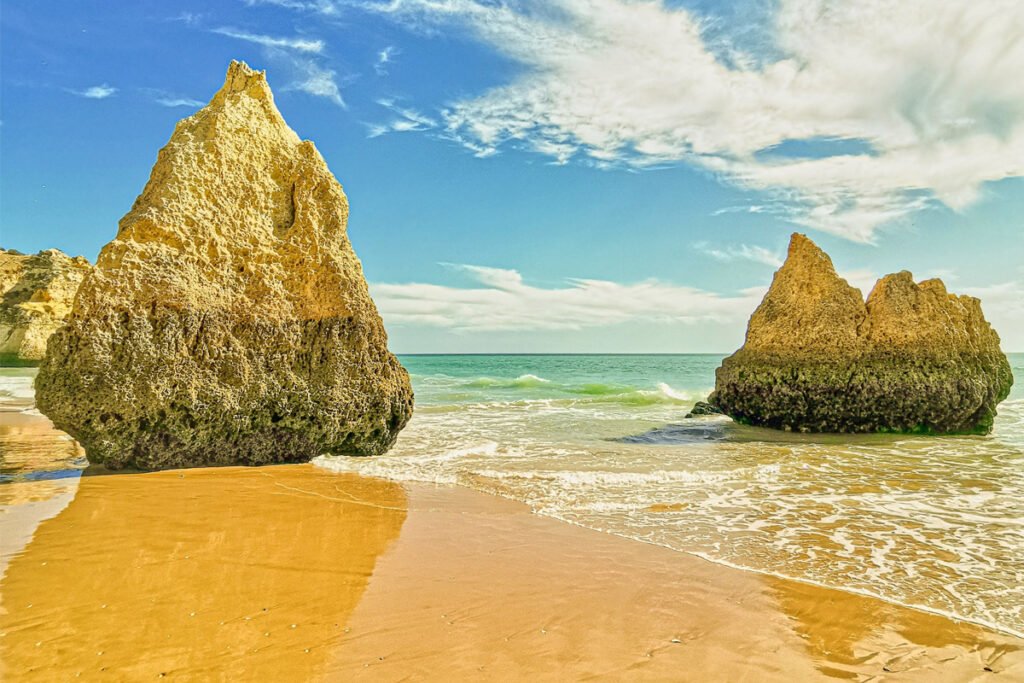
Praia dos Três Irmãos (Alvor): Algarve postcard beach
If you want one beach that looks like the “classic Algarve” in real life, this is it. Praia dos Três Irmãos is famous for its dramatic sea stacks, warm golden sand, and that turquoise Atlantic color that makes every photo pop.
- The Experience: Go at low tide to explore the rock formations and natural corridors along the shoreline —it’s one of the most beautiful beach moments in the region.
- Walking: Connect your visit with the Alvor Boardwalk, a 6km wooden path through the Ria de Alvor nature reserve—ideal for an easy scenic walk without steep climbs.
Benagil & the sea caves: Algarve’s signature boat experience
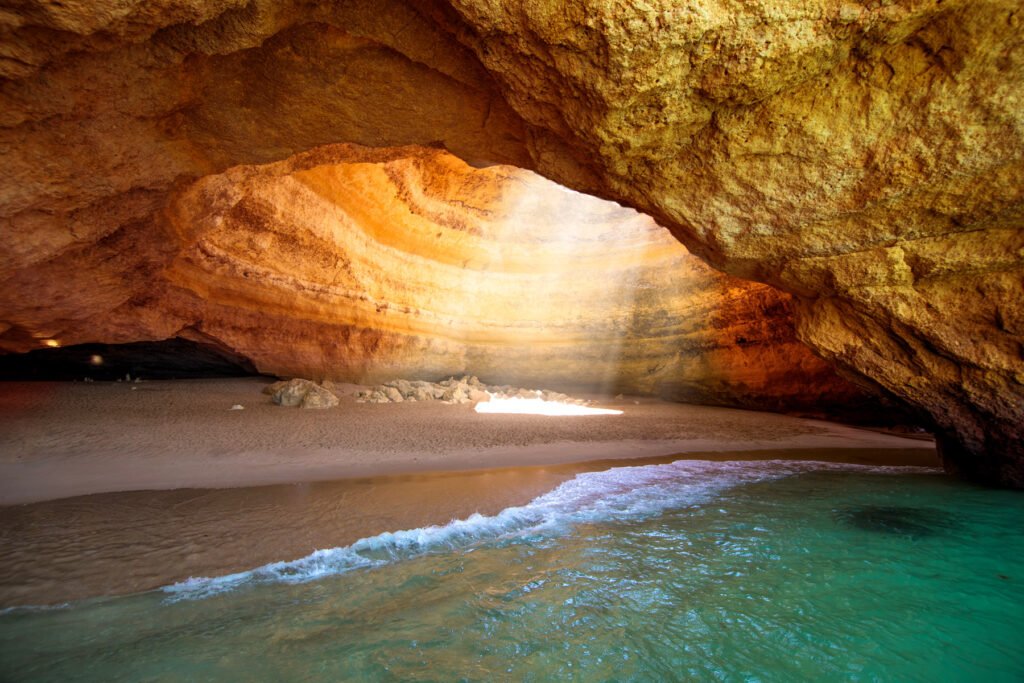
If you have seen one photo of the Algarve, it was likely the Benagil Sea Cave. Often described as a «natural cathedral,» this massive limestone dome features a perfect circular hole in its ceiling (the «eye») that illuminates a hidden beach inside with golden sunlight.
- How to Experience it: In 2026, Benagil is the starting point for exploring a coastline riddled with grottoes and secret coves. The most immersive way is via kayak or Stand-Up Paddle (SUP) to actually land on the sand inside. If you prefer comfort, a small-boat tour from Carvoeiro, Albufeira, or Portimão will allow you to see Benagil along with dozens of other formations like the «Elephant» or the «Love Cave.»
- Trekking (Seven Hanging Valleys): The area surrounding Benagil is home to the Seven Hanging Valleys Trail (6km). You can walk along the top of the cliffs and look down into the «eye» of the cave from above before heading down to the water.
WTDP Tip: Logistics are everything. Book the first tour (8:00 AM) to beat the crowds. Always check sea conditions 24 hours in advance, as access depends on the Atlantic’s rhythm.
The Algarve essentials (iconic places)
- Ponta da Piedade (Lagos): cliff viewpoints + boat tours through rock formations.
- Benagil Sea Cave (Benagil/Carvoeiro area): Algarve’s most famous cave experience (boat/kayak/SUP).
- Ria Formosa islands (Faro/Olhão side): ferry/boat routes to sandbanks and island beaches.
- Cabo de São Vicente (Sagres): dramatic cliffs + lighthouse area + sunset ritual.
Portuguese Gastronomy & Cocktail Culture (Algarve edition)
Algarve isn’t only about beaches and cliffs—it’s also one of Portugal’s most delicious coastal regions. The food here is tied to the Atlantic: simple ingredients, fresh seafood, and long lunches that turn into sunset drinks. If you’re searching what to eat in Algarve, focus on what the region does best: ocean flavors, local cataplanas, and relaxed beach-town dining.
What to eat (the local way)
Seafood is the Algarve signature. Prioritize restaurants that feel product-driven (shorter menus, fresh fish selection, local sides).
- Cataplana (seafood stew): Algarve’s iconic dish—cooked in a traditional copper pot, aromatic and meant to be shared.
- Sardinhas assadas: grilled sardines (especially in season), simple and intensely Portuguese.
- Polvo (octopus): often grilled or baked—one of the Algarve’s most reliable “order this” choices. For a more traditional local twist, try Salada de Polvo à Algarvia or Arroz/Ensopado de Polvo à Algarvia.
- Arroz de marisco: rich seafood rice—perfect when you want something truly local beyond tourist classics.
- Perceves / amêijoas (if available): for the true Atlantic taste—salty, fresh, and unforgettable.
Rooftops, bars & coastal evenings
Algarve evenings are built for golden light. Choose your vibe:
- Beach clubs & waterfront bars: relaxed, stylish, and perfect for a sunset cocktail after a long beach day.
- Marina evenings: a polished vibe for dinner + drinks (especially in Lagos, Vilamoura, Albufeira areas).
- Old town wine bars: quieter and more local, ideal for a slower night.
WTDP Tip: Avoid restaurants with aggressive tourist menus on the busiest strips. Walk 5–10 minutes into side streets, choose places where locals are eating, and you’ll almost always get better quality and better value.
Real estate & investment: why the Algarve makes sense (for lifestyle and long stays)
Algarve is not only a holiday region—it’s a high-demand lifestyle market. People buy here for two main reasons:
- Quality of life (sun, ocean, outdoor living, wellness rhythm)
- Long-term international demand (the Algarve stays on the radar for expats, second-home buyers, and retirement planning)
Why living in the Algarve feels easy
- Climate and year-round outdoor lifestyle: you can build a routine around the sea, sports, walks, and open-air dining.
- Strong expat and international community: easier integration for long stays.
- Slower pace without losing essentials: the region supports a balanced lifestyle that many people actively seek when relocating.
Why buying in the Algarve can be attractive
- Consistent foreign demand: the Algarve is repeatedly highlighted as a strong region for international buyers, often linked to beaches, golf, and climate.
- Lifestyle-driven value: many buyers aren’t only chasing returns—they’re buying a place they actually want to use (which strengthens long-term demand).
WTDP note: This section is intentionally educational. WTDP prioritizes trust before transactions.
A simple itinerary: What to do in Algarve in 4–5 days
For a stay of this duration, focusing on the Central and Western Algarve is the most logical strategy to minimize travel time while experiencing the most dramatic cliffs and authentic towns.
Day 1: The Dramatic West (Lagos & Ponta da Piedade)
Focus: Iconic cliffs and historic seafaring vibes.
- Morning: Explore Lagos Old Town. Walk through the historic walls and visit the Church of St. Anthony.
- Highlight: Head to Ponta da Piedade. Explore the clifftop trails and sea arches that define the «Algarve Postcard.»
- Afternoon: Descend to Praia do Camilo or Praia de Dona Ana (both in Lagos) for a swim in turquoise waters.
- Evening: Sunset at the Lagos Marina followed by a fresh Cataplana dinner in the town’s side streets.
Day 2: The «End of the World» (Sagres & Vila do Bispo)
Focus: Raw nature, surfing vibes, and high Atlantic cliffs.
- Morning: Drive West to Sagres (30 min from Lagos). Visit the Sagres Fortress and feel the power of the Atlantic wind.
- Afternoon: Relax at Praia del Beliche or watch the surfers at Praia do Tonel.
- Highlight: Cabo de São Vicente at Sunset. Join the ritual of watching the sun disappear from Europe’s southwesternmost lighthouse.
- Evening: Taste the Atlantic with a plate of Percebes (barnacles) or Polvo (octopus) in a traditional Sagres tavern.
Day 3: The Central Gold (Benagil & Alvor)
Focus: Sea caves and natural rock corridors.
- Morning: Head to Benagil Beach. Embark on an early boat, kayak, or SUP tour to enter the famous Benagil Sea Cave.
- Afternoon: Drive to nearby Praia dos Três Irmãos (Alvor). At low tide, walk through the rock corridors and hidden caves on the sand.
- Highlight: Walk the Alvor Boardwalk at sunset, a peaceful path through dunes and marshlands.
- Evening: Seafood dinner in Alvor or Portimão, focusing on Sardinhas Assadas (grilled sardines).
Day 4: The Gateway to the Islands (Faro & Olhão)
Focus: Lagoons, historic centers, and island life.
- Morning: Wander the Faro Old Town (Vila Adentro). Walk through the neogothic arches and visit the Cathedral.
- Highlight: Take a boat from Faro or Olhão (15 min apart) into the Ria Formosa Natural Park. Spend the day on Ilha Deserta or Ilha do Farol.
- Afternoon: Visit the famous red brick fish market in Olhão and walk the waterfront.
- Evening: Sunset cocktails at a rooftop bar in Faro overlooking the lagoon channels.
Day 5: The Authentic East (Tavira)
Focus: Slower rhythm and traditional Portuguese architecture.
- Morning: Travel to Tavira, the most charming town in the East, known for its Roman bridge and quiet riverbanks.
- Afternoon: Take the small train or walk to Praia do Barril to see the unique Anchor Graveyard on the beach.
- Highlight: A long, slow lunch of Arroz de Marisco (seafood rice) by the Gilão River.
- Evening: A final stroll through Tavira’s quiet streets, soaking in the authentic soul of the Eastern Algarve.
¿Por qué esta logística es perfecta?
Día 4 y 5 (Base Faro/Tavira): El Faro y O
Día 1 y 2 (Base Lagos): Todo está en el extremo oeste. No hay viajes largos.
Día 3 (Centro): Te mueves entre Alvor, Portimão y Benagil, que están a 20-25 minutos entre sí.
FAQ: Algarve (2026)
Is Algarve only beaches?
No—beaches are the base, but caves, boat trips, coastal walks, islands (Ria Formosa), and dramatic headlands are core experiences.
Do I need a car in the Algarve?
If you want to move across zones efficiently (west/central/east), a car makes the trip smoother—especially for viewpoints and beaches that aren’t in town centers.
What’s the #1 mistake?
Trying to “do everything” from one base without planning zones. Algarve is spread out—choose your base strategically.
So… what to do in Algarve in 2026?
If you want Portugal’s most iconic coastal scenery—cliffs, caves, island beaches, and a lifestyle that feels like a reset—Algarve is the region. It’s an easy place to visit, and for many people, an even easier place to imagine living.
WTDP note: If you want Portugal with river drama, culture, wine landscapes, and Atlantic calm—Porto District delivers it in a way that feels grounded and elegant. It’s where Portugal’s northern character becomes a lifestyle: slower, deeper, and surprisingly addictive.